
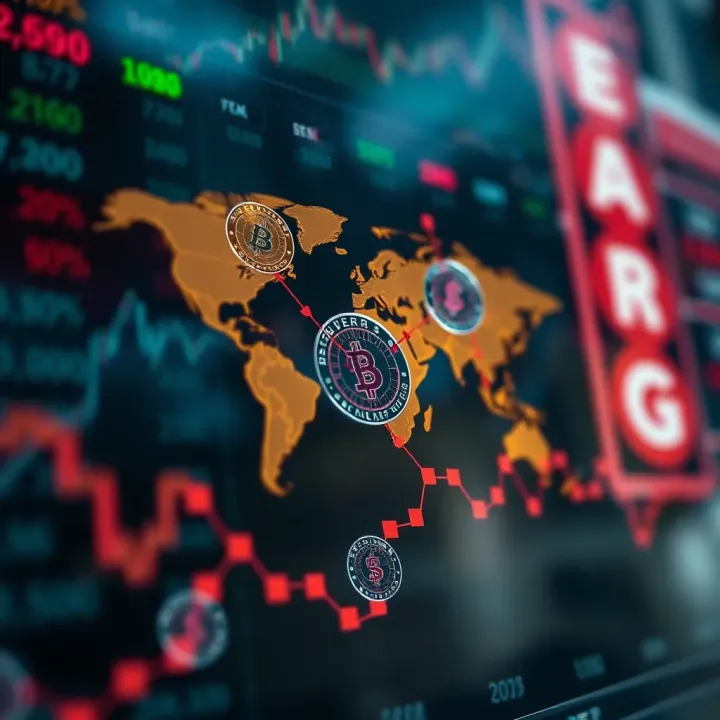
Understanding Forex Market Basics and Key Factors
🌍 Dive into forex market basics: currencies, exchange rate factors, trading methods & global economic indicators shaping market moves effectively.
Edited By
Emily Carter
Derivatives often pop up in finance and maths discussions, but not always with a clear understanding of what they really mean or how they're used. Simply put, a derivative is something whose value depends on the value of another asset. Think of it as a financial tool that takes its worth from an underlying asset, like shares, currencies, interest rates, or commodities.
In South Africa, derivatives play an important role in how businesses and investors manage risks—particularly given the country’s exposure to currency fluctuations, loadshedding impacts, and commodity price swings. For example, a gold mining company might use derivatives to protect itself against sudden drops in gold prices, ensuring more predictable revenues.

There are several common types of derivatives:
Futures: Contracts to buy or sell an asset at a set price on a future date. These are standardised and traded on exchanges, useful for hedging or speculating.
Options: Giving the buyer the right, but not the obligation, to buy or sell at a certain price before expiry. This offers flexibility compared to futures.
Swaps: Agreements to exchange cash flows, often used to manage interest rate or currency risk.
Forwards: Similar to futures but customised and traded over the counter (OTC).
Calculating and interpreting derivatives requires grasping their pricing, which can involve factors like the underlying asset’s price, time until expiry, volatility, and prevailing interest rates. Models such as Black-Scholes are often used but need careful application to South African market conditions.
Understanding derivatives is key before engaging with them, as they can amplify both profits and losses—trading without solid knowledge is risky.
For traders and investors in Mzansi, derivatives offer a way to:
Manage currency risk, especially important given the rand’s volatility.
Hedge against interest rate hikes affecting loan repayments or bond values.
Lock in prices for commodities critical to the economy, like platinum or maize.
Speculate on market movements, though this should be approached with caution.
By appreciating derivatives’ types, calculation methods, and practical uses, you can make more informed decisions in managing financial risks or seizing market opportunities. The article will break down each aspect to help you navigate the complexities and apply derivatives confidently in South Africa’s unique financial landscape.
Understanding derivatives is fundamental for anyone involved in finance or mathematics. At its core, a derivative measures how a quantity changes in response to another. This might sound a bit abstract, but the concept has practical importance in many real-world scenarios, from tracking market movements to optimising production processes.
A derivative represents the rate at which one variable changes relative to another. In mathematical terms, it's the slope of a function at any given point. For example, if you imagine the speedometer in a car, the speed it shows is essentially the derivative of the car’s position over time. In finance, this could translate to the rate at which a stock price changes in response to market conditions.
Consider a farmer here in the Free State who tracks the growth rate of his maize crop depending on rainfall. The derivative in this case would show how sensitive crop growth is to changes in rainfall — useful information when planning for droughts or floods.
Derivatives play a double role: in mathematics, they help us understand and predict how systems behave; in finance, they provide tools to manage risk and speculate intelligently. Traders might use derivatives to hedge against price swings in commodities like gold or oil, stabilising cash flows despite market volatility.
For instance, a South African mining company could use futures contracts (a type of financial derivative) to lock in prices for their ore ahead of time, protecting themselves against sudden drops in global metal prices. This reduces uncertainty and helps them plan budgets reliably.
Mathematically, derivatives assist analysts in identifying trends, turning points, and acceleration in data series — valuable when assessing economic indicators or stock trends. They reveal not just where something stands, but how fast and in which direction it’s moving.
Mastery of derivatives bridges the gap between raw data and informed decisions, whether calculating risk or charting new business strategies.
In summary, this section aims to clarify the basics of what derivatives are and why they matter, setting the stage for deeper exploration of their types, computations, and applications in both the mathematical and financial spheres in South Africa.
Understanding the core principles of calculus derivatives is essential for anyone dealing with changes over time or varying quantities — this holds true in maths and financial markets alike. Derivatives measure how one variable changes relative to another, which helps traders, investors, and analysts predict trends or spot turning points quickly. These principles provide tools to break down complex behaviours into manageable insights that can guide decision-making.
At its heart, a derivative represents the rate of change of a function with respect to its input — think of it as measuring how fast something is moving or evolving. For instance, if you track the price of a share throughout the day, the derivative tells you how quickly the price moves at any moment. This instantaneous rate of change is what sets derivatives apart from average changes, offering a fine-grained look at dynamics.
In financial practice, this concept helps with gauging volatility or momentum. Say a stock price climbs steeply early in the session then slows down; the derivative captures those speed shifts clearly. Without understanding derivatives, interpreting such subtle changes would be guesswork.
The power rule is a straightforward but powerful tool: when taking the derivative of a variable raised to a power (like xⁿ), you multiply by the power and subtract one from the exponent. For example, the derivative of x³ is 3x². This rule simplifies handling polynomial functions common in modelling investment returns or cost curves.
It's especially handy when dealing with growth rates or scaling effects in economics and finance. Instead of tediously calculating limits, the power rule gives a quick formula to find slopes of curves at any point.
When a function involves multiplying two variables, you can't just take derivatives separately. The product rule states you take the derivative of the first times the second, plus the first times the derivative of the second. In formula terms: (fg)' = f'g + fg'.
This rule is practical when modelling situations where two factors multiply, like price times quantity in revenue calculations. If either changes, the product rule helps find how their combined effect shifts instantly.

For dividing one function by another, the quotient rule is your go-to. It considers both numerator and denominator changes: the derivative is (f'g - fg') divided by g². This prevents mistakes that would come from naïvely differentiating numerator and denominator separately.
You’ll find this useful in contexts like calculating rates where one quantity depends on another, such as profit margin (profit over sales). The quotient rule tracks how small changes impact the overall ratio efficiently.
Real-world functions often nest inside each other — the chain rule handles this complexity. It states that the derivative of a composite function equals the derivative of the outer function times the derivative of the inner one. For example, differentiating sin(x²) requires differentiating sin(u) where u = x², then multiplying by the derivative of x².
Financial derivatives models often involve such nested functions, for example, options pricing formulas depending on exponential growth functions of time and volatility. The chain rule breaks these nested dependencies into understandable parts.
The slope of a function’s tangent line at any point equals its derivative there. This slope tells you whether a function is increasing, decreasing, or staying flat at that instant. Traders use this concept to identify if a stock price trend is climbing steadily or starting to turn.
Graphically, the steeper the slope, the faster the change. If the tangent line points upwards, the function grows; downwards means decline. Knowing the slope enables quick decisions, like when to enter or exit a trade.
Derivatives can pinpoint highs and lows on graphs by finding where the slope equals zero — these are potential maxima or minima. In trading, spotting these points helps identify peaks where prices might drop or valleys where prices could rise.
For example, if a derivative crosses from positive to negative at a point, that spot likely represents a local maximum. Investors can use this to take profits timely or set stop-loss orders.
Beyond slopes, derivatives also reveal the curve’s shape — whether it bends upwards (convex) or downwards (concave). The second derivative indicates this concavity. An inflection point occurs where concavity changes, signalling a shift in trend behaviour.
In finance, understanding concavity helps when assessing risk. For instance, an option’s value curve might bend to show accelerating gains or slowing growth, guiding pricing and hedging strategies effectively.
Mastering these calculus derivative principles enhances your ability to interpret changing market data and mathematical functions with precision, giving you an edge in analysis and strategic planning.
Financial derivatives form an essential part of South Africa's investment and risk management landscape. They're contracts whose value depends on the price of an underlying asset, ranging from commodities like gold and maize to financial instruments such as shares or bonds. Understanding the main types of derivatives traded locally is key for anyone involved in trading, investing, or financial advising here.
Forwards and futures are both contracts obliging buyers and sellers to exchange an asset at a predetermined price on a specific date. The key difference lies in how they're traded: forwards tend to be private agreements with customised terms, while futures are standardised and traded on exchanges like the South African Futures Exchange (SAFEX). For example, a maize farmer might enter a forward contract to sell harvest at a fixed price to protect against price drops, while a trader might buy maize futures for speculation or hedging.
Options grant the buyer the right, but not the obligation, to buy or sell an asset at a set price before or on expiry. This flexibility makes options appealing in volatile markets such as the JSE or commodity sectors. A business expecting to purchase foreign goods might buy currency options to guard against rand fluctuations without locking in a price outright. South African investors also use options to hedge equity positions or speculate on price movements with controlled risk.
Swaps involve exchanging future cash flows between parties based on underlying factors like interest rates or currency rates. They’re particularly relevant for South African companies with exposure to fluctuating interest costs or currency risks. For instance, a company with a variable-rate loan might enter an interest rate swap to fix its repayments. Currency swaps help firms manage exchange rate exposure when dealing with international suppliers or customers.
Hedging is a major driver for derivatives use in South Africa. Producers of export minerals or agricultural goods face volatile global prices and currency risks. By locking in prices via futures or options, they shield their revenue streams from sudden market swings while ensuring budget certainty. Even import-dependent businesses can hedge currency risk to stabilise import costs amid rand volatility. This proactive risk management is vital amidst Eskom-related economic unpredictability.
Speculators use derivatives to profit from price changes without owning the actual asset. They typically trade futures, options, or swaps aiming for short-term gains. For example, a trader on SAFEX might speculate on platinum prices rising without holding physical metal. While speculation can increase market liquidity, it requires solid understanding to avoid hefty losses, especially under South Africa’s often turbulent economic conditions.
Beyond commodity producers and traders, derivatives serve broader risk management roles across South Africa’s financial sector. Banks, insurers, and investment funds use derivatives to balance portfolios, manage interest rate exposures, or optimise returns. This risk control supports financial stability and efficient capital use, crucial in a market influenced by domestic policy changes and global economic shifts.
Mastering the types of financial derivatives and their specific local applications empowers traders and businesses to make informed decisions, reducing uncertainty in a complex market.
Understanding how these instruments function in the South African context equips market participants to better navigate volatility and protect their financial interests.
Understanding the risks involved with derivatives is key for anyone dealing with these financial instruments, be it traders, investors, or financial advisors. Derivatives can offer solid opportunities for hedging and speculation, but they also carry challenges that can quickly lead to significant losses if not managed properly. South African markets, influenced by local economic conditions and regulatory frameworks, demand careful attention to these risks.
Market risk refers to the possibility that the value of a derivative will change unfavourably due to movements in the price of the underlying asset. For example, a maize farmer in the Free State using maize futures to lock in prices may still face market risk if sudden shifts in weather or global demand cause the prices to swing dramatically. This risk is especially relevant during periods of economic instability or global shocks, which can affect commodity prices, interest rates, and shares listed on the JSE.
Market risk is a direct exposure to price volatility. Derivative contracts often amplify profits but also losses because of their leveraged nature. A small unfavourable price movement can wipe out more than the initial margin. Understanding the underlying asset and applying limit orders or stop losses are practical ways to mitigate this risk.
Credit risk in derivatives, often called counterparty risk, occurs when the other party in the contract defaults on their obligation. In South Africa, where OTC (over-the-counter) derivatives are prevalent, this risk is more pronounced compared to exchange-traded derivatives that have clearing houses acting as intermediaries. For instance, a local investment firm entering a swap contract with a smaller counterparty might suffer losses if that party goes bankrupt or fails to deliver payments as agreed.
Managing credit risk requires thorough due diligence, ensuring trading with reputable, well-capitalised institutions, and often employing collateral or margin requirements to cover potential default exposures.
Liquidity risk happens when a trader or investor cannot enter or exit positions swiftly without affecting the price. South Africa's derivatives market, while growing, can be less liquid than larger international markets, especially for certain contracts like niche commodity options or interest rate swaps. During volatile conditions or Eskom-induced market jitters, liquidity can dry up quickly.
This risk means you might be stuck holding a derivative position longer than intended or forced to sell at unfavourable prices. To manage liquidity risk, it’s best to stick with widely traded contracts and keep track of daily volumes and market depth.
The Financial Sector Conduct Authority (FSCA) regulates derivatives trading in South Africa to promote transparency and protect market participants. It oversees the licensing of derivative exchanges and brokers, ensuring that only those meeting strict standards operate in the market. They also tackle market abuse and require fair dealing practices.
For local traders and businesses, the FSCA’s role means greater confidence in the integrity of the markets. However, it also means complying with rules that might include the monitoring of unusual trading behaviour and adherence to disclosure requirements to prevent manipulation.
Compliance and reporting requirements under the FSCA’s watch ensure that derivative transactions are recorded and reported accurately for regulatory oversight. This includes periodic submissions by brokers and market participants on their exposure and risk profiles. For example, margin requirements must be documented, and trades cleared through authorised platforms.
Adhering to these rules helps limit systemic risk and boosts investor protection. Failure to comply can result in penalties or loss of licence, so understanding the regulatory landscape is essential before engaging in derivatives trading.
Staying aware of risks and regulation isn’t just about avoiding losses—it’s about staying in the market for the long haul. Knowing how to manage market, credit, and liquidity risks, while following FSCA rules, is part of smart derivative trading in South Africa.
In sum, managing derivatives risks in South Africa requires a balanced view of local market nuances, careful partner selection, and strict compliance with regulatory demands. This approach helps individuals and businesses use derivatives effectively without getting caught out by unexpected pitfalls.
Understanding how to navigate derivatives effectively is vital for both individuals and businesses looking to protect their financial interests or seek opportunities in markets. This section offers practical steps and considerations that help you assess whether derivatives suit your objectives, how to start trading responsibly, and the typical pitfalls to avoid.
Before venturing into derivatives trading, carefully evaluate why you need these instruments. Are you a business aiming to hedge currency risk in international deals? Or an investor wanting to speculate on commodity prices like gold or crude oil? Derivatives come with complexity and potential for significant loss, so they are not suitable as casual investment tools.
Consider your risk tolerance, financial knowledge, and investment goals. For example, a small business importing goods from the US may use forward contracts to lock in exchange rates, reducing unpredictability. On the other hand, retail investors without proper understanding might expose themselves to excessive volatility if they engage in option trading without adequate preparation.
Before you place any trades, build a solid foundation of knowledge on how derivatives work. This includes understanding contract specifications, market mechanisms, and settlement processes. Many South African financial institutions and online platforms offer courses or webinars tailored for beginners and professionals alike. Taking time to learn reduces costly mistakes and builds confidence.
Derivatives come in various forms: futures, options, forwards, and swaps, each serving different purposes. Picking the right product depends on your strategy and risk appetite. For example, farmers might prefer futures contracts to secure prices for crops, while investors looking to profit from price movements might favour options. It pays to weigh the costs involved, such as premiums and margin requirements, against expected benefits.
Engage only with brokers registered and regulated by the Financial Sector Conduct Authority (FSCA) in South Africa. This helps ensure ethical conduct, adequate client protection, and compliance with legal standards. A registered broker provides transparency on fees and offers access to reliable trading platforms. Avoid unregulated entities, which carry significant risk of fraud and poor market execution.
Jumping into complex derivatives without proper training.
Overleveraging positions beyond your risk capacity.
Ignoring the cost implications like margin calls and premiums.
Neglecting to establish clear exit strategies.
Failing to keep abreast of market and regulatory changes that impact derivatives.
Remember, derivatives can amplify both profits and losses. Tackling them with preparation and caution helps you manage risks effectively.
With thoughtful assessment and the right guidance, derivatives can be a useful part of your financial toolkit rather than a source of unwanted surprises.
🌍 Dive into forex market basics: currencies, exchange rate factors, trading methods & global economic indicators shaping market moves effectively.

Explore RCG Raw: its key features, practical uses across industries, sourcing tips, quality factors & market trends in South Africa and beyond 📊🔍

Explore synthetics in South Africa 🧵: types, uses, pros, cons & eco-impact. Learn how synthetic materials shape industries & everyday life.

Explore the 5%ers' origins, beliefs, and impact 🌍, clearing misconceptions to understand this unique South African and global movement better.
Based on 10 reviews