
Understanding Margin in Forex Trading
📉 Learn what margin means in forex trading, how it works with leverage, risks involved, and practical tips for South African traders staying within local rules.
Edited By
Henry Mitchell
In trading, understanding your account's free margin is essential, especially if you're working with leveraged accounts common in South Africa's growing retail trading scene. Free margin is the portion of your funds available to open new positions or absorb losses from existing trades without risking a margin call.
Simply put, your free margin sits between your total equity (the combined value of your account plus or minus unrealised profits and losses) and the margin used to maintain current trades. Think of it as the financial buffer that keeps your trading afloat when markets move unexpectedly.
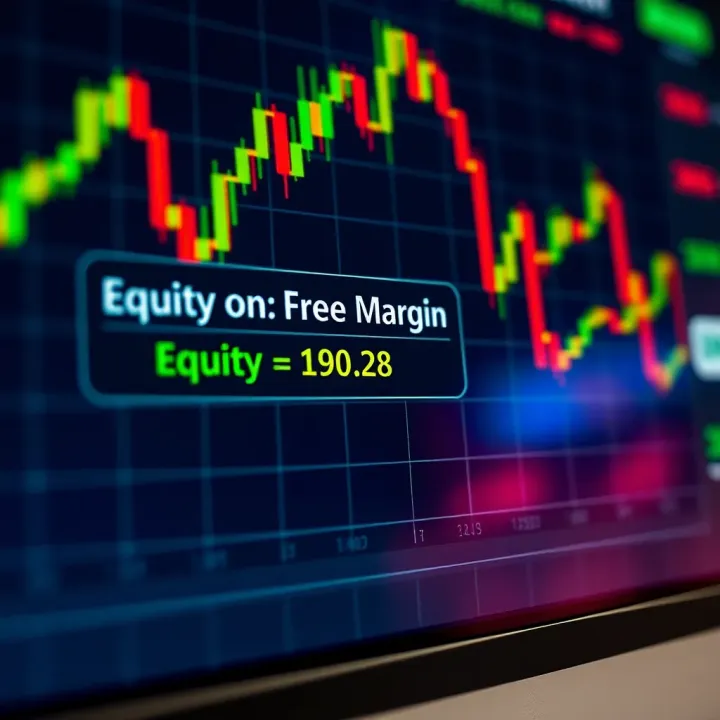
For example, imagine you've deposited R10,000 and opened a position requiring R2,000 margin. If this trade currently holds an unrealised profit of R500, your equity is R10,500, and your free margin would be R8,500 (R10,500 equity minus R2,000 used margin). This R8,500 is what you have left for new trades or to withstand price swings.
Monitoring free margin helps prevent margin calls — a broker's demand to add funds or close positions, common in volatile markets or during Eskom load shedding when market unpredictability spikes.
Free margin works hand in hand with other account figures:
Balance: The cash amount excluding open trades.
Equity: Balance plus or minus any open trade profits or losses.
Used margin: Funds locked for current positions.
Free margin: Equity minus used margin.
For South African traders, knowing your free margin position means you can manage risk better, avoid forced liquidations, and adjust your exposure to volatile instruments like forex pairs or JSE shares. It also influences your ability to open new trades, as insufficient free margin blocks new positions.
Understanding free margin allows you to make sound decisions rather than flying blind. Knowing exactly how much money is available protects your capital and helps you trade smarter, not just harder.
Free margin is a fundamental trading term that every serious trader needs to understand. In essence, it represents the funds available in your trading account that aren’t committed to current open positions. Knowing your free margin can help you decide when to open new trades and determine how much risk you can take without being forced out by your broker.
Free margin is calculated by subtracting the used margin from your equity. Your equity refers to the total value of your account including unrealised profits or losses, while used margin is the amount set aside by your broker to maintain existing open positions. For example, if your equity is R50,000 and you have R20,000 tied up as margin for your trades, your free margin is R30,000 — funds you’re free to use.
This free margin acts as a buffer that lets you open additional trades or absorb losses on your current positions without immediately triggering a margin call. For instance, if the market moves against you but your free margin is sufficient, you won’t have to close out your trades straight away. Instead, you have some breathing room to either adjust your strategy or add more margin if needed.
It’s crucial to distinguish free margin from equity and used margin because mixing these up can lead to poor decisions. Equity is your account’s overall value—cash plus or minus open position profits or losses. Used margin is the amount locked up to keep your trades open, meaning you can’t use it elsewhere. Free margin is what’s left from your equity after setting aside that used margin.
Being clear on these terms helps you manage risk effectively. Without understanding how these balances interact, you may unknowingly overextend yourself, leading to margin calls or forced liquidation by your broker. For example, if you believe your free margin is higher than it actually is, you might open trades larger than your account can handle during volatile times, putting your capital in jeopardy.
Monitoring free margin closely allows you to plan trades wisely and avoid unpleasant surprises, especially in fast-moving markets.
In short, free margin shows you how much of your funds remain free for trading and covering losses. It’s a practical tool for staying in control and preserving your trading capital over the long haul.
Knowing how to calculate free margin is vital for traders who want to manage their accounts effectively. Free margin tells you how much of your funds are still available to open new trades or cover potential losses. Without grasping this figure, you risk overextending yourself and facing margin calls or forced liquidations.
At its core, free margin equals your equity minus your used margin. Equity represents your total account balance plus or minus any unrealised profits or losses on your open trades. Used margin, on the other hand, is the amount locked up in your current positions.
For example, if your account equity stands at R12,000 and you have R3,000 tied as margin in active trades, your free margin is R9,000 (R12,000 − R3,000). That R9,000 is what you can still use to open new trades or absorb market volatility without facing an immediate margin call.
Say you deposit R15,000 and open two positions requiring R4,000 and R2,000 margin, respectively. Your used margin totals R6,000. Suppose your open trades currently show an unrealised loss of R1,000; your equity is then R14,000 (R15,000 minus R1,000). This means your free margin is R8,000 (R14,000 minus R6,000).
Alternatively, if your trades bring an unrealised gain of R500, your equity rises to R15,500 and your free margin improves to R9,500. These day-to-day swings emphasise the need to keep a close eye on your equity and used margin to understand your available free margin.
Market prices constantly move, impacting your open trades' profit or loss, which directly changes your equity. As your equity fluctuates, so does your free margin. For instance, a sudden price drop might turn a healthy free margin into a borderline or negative figure, signalling danger.
That’s why traders must monitor these changes closely, especially during volatile periods like economic announcements or unexpected events affecting local shares or forex pairs like the ZAR/USD. Keeping track helps prevent surprise margin calls.
Adding funds to your trading account increases equity and free margin, giving you more room to trade or withstand market moves. Conversely, withdrawals reduce your equity and free margin, tightening your capacity.
If you withdraw R2,000 from the example above, your free margin drops accordingly, possibly constraining your ability to open new trades or maintain current positions safely. Knowing how deposits and withdrawals affect your free margin allows you to plan better and avoid risking getting caught short during market swings.
Remember: Free margin isn’t just a number; it’s your safety net in trading. By understanding how to calculate and monitor it, you stay in control and protect your capital effectively.
Free margin plays a vital role in managing risk in trading. It represents the buffer capital available after accounting for open positions and used margin. Without enough free margin, traders can't open new positions or cushion their accounts against market swings. In volatile conditions, this buffer becomes even more crucial to avoid forced closures or margin calls.
Low free margin is a red flag for brokers. When your free margin tumbles close to zero, your account equity is barely covering the margin requirement. Brokers monitor this closely because it signals increasing risk of losses exceeding your deposited funds. Should free margin drop too low, brokers may issue a margin call — demanding you either add funds or close positions.
A margin call isn’t just a warning; it’s a broker’s way of protecting themselves and you from deeper losses.
If ignored, brokers might liquidate your losing trades automatically, known as forced liquidation. This prevents your account from going negative but can leave you with realised losses and fewer opportunities to recoup. For instance, a trader with R10,000 equity and a R9,500 used margin has only R500 free margin. A small drop in market prices could trigger a margin call fast.
Calculating trade volumes with free margin in mind helps protect your capital. If you open trades that consume too much margin, you run the risk of hitting margin calls as prices fluctuate. Traders often calculate the maximum position size they can afford by dividing free margin by the margin needed per trade unit. For example, if your free margin is R2,000 and each trade requires R200 margin, you can open up to 10 units safely.
Balancing leverage to safeguard your investment is equally important. Higher leverage increases potential gains but also magnifies losses, chewing through free margin faster. A trader using 1:100 leverage might see margin requirements balloon quickly, especially in volatile markets like forex. It's wiser to adjust leverage according to your free margin and risk appetite — sometimes lower leverage means keeping trades open longer without panic selling.
Managing free margin wisely helps traders avoid expensive margin calls, plan trade sizes realistically, and maintain a workable safety net. In South Africa’s often volatile markets — where local economic news or loadshedding can cause sharp price moves — keeping an eye on free margin isn't just smart, it's essential.
Seeing how free margin works in real-life trading can really clarify its importance. This section breaks down practical scenarios where free margin plays a direct role in decision-making and risk management. Knowing these examples helps traders understand not just what free margin is, but how it impacts the trading day-to-day.
Free margin shows you how much money you can safely use to open new trades without risking a margin call. Say you have R10,000 equity in your account and your current open positions are using R4,000 as margin. Your free margin is R6,000—the money left that you can use to enter new trades. This figure is crucial because it determines your capacity to diversify positions or seize new opportunities without over-leveraging.
For example, if you want to enter a forex trade with a 1:100 leverage and the required margin is R1,000, having R6,000 free margin means you can open up to six such trades, as long as your risk management allows it. This precise calculation helps you avoid taking on more exposure than your free margin can support, which is vital in volatile markets.
Price changes directly influence your free margin because they alter your equity. If an open position moves in your favour, your equity increases, boosting free margin and allowing more flexibility for additional trades. On the flip side, if prices move against you, equity drops, shrinking your free margin and limiting your options.
Consider a volatile market phase where a sudden price drop in your open position decreases your equity by R2,000. Your free margin shrinks accordingly, increasing the risk of hitting a margin call if further losses occur. Managing trades during these times means closely monitoring free margin levels, setting strict stop losses, and scaling back on opening new positions until the situation stabilises.
Keeping a close eye on free margin during market swings can save you from forced liquidation and help you stay in the game longer.
In short, understanding and monitoring free margin amid ongoing price movements allows you to react swiftly, preserving your capital and trading capacity through ups and downs.
In both scenarios, free margin acts like a financial cushion and a health check for your trading account. Practical awareness of these examples equips traders with a better sense of timing, position sizing, and risk appetite, all critical for successful trading in South Africa’s dynamic markets.
Navigating the local trading environment effectively requires South African traders to keep a solid grip on their free margin. Monitoring and maintaining a healthy free margin is more than just a technical detail; it means safeguarding your trades from unwanted liquidations and ensuring you have enough backing to explore new opportunities. This proactive approach helps traders stay on the right side of brokers’ margin rules and reduce stress during volatile market swings common in forex, commodities, and indices trading.
South African brokers, such as IG South Africa, HotForex, and ThinkMarkets, typically offer clear margin systems that show how much margin is being used and what remains free. These platforms calculate free margin in real time, giving traders accurate insights into their buying power. Each broker's margin requirement may differ slightly, so knowing the specifics helps traders pick a platform that matches their risk appetite.
Trading platforms like MetaTrader 4 and MetaTrader 5 are widely used here. They display free margin prominently alongside equity and used margin figures. This setup allows traders to spot quickly when their free margin dips too low and take swift action. For example, if the platform shows a declining free margin due to open positions running at a loss, the trader can decide to close some trades or add funds.
Regularly reviewing your trading account helps you stay ahead. Many platforms offer custom alerts that notify you if free margin crosses a defined threshold. By setting an alert at, say, a 30% free margin level, you avoid being caught off guard and getting unwanted margin calls. This simple habit saves headaches and preserves trading capital.
Using risk limits and stop-loss orders keeps your free margin in check too. Setting stop losses ensures trades close automatically before losses eat too deeply into your margin. For instance, if you open a R10,000 position with a 1% stop loss, the maximum loss won’t drastically reduce your free margin. This technique helps maintain control in unpredictable markets, ensuring the free margin cushion remains intact.
Keeping a watching eye on your free margin with the right tools and habits protects your trades and helps you capitalise on opportunities without breaking a sweat.
Clear understanding, combined with practical steps, makes free margin a powerful ally — not just a number to glance over. In South Africa’s unique trading environment, this approach matters, especially amid load shedding uncertainties and fluctuating rand values that can influence market conditions.
📉 Learn what margin means in forex trading, how it works with leverage, risks involved, and practical tips for South African traders staying within local rules.
Explore Forex Fury 🤖, an automated forex trading tool helping South African traders understand currency markets, features, risks, and if it fits local trading needs.
Discover how free forex trading bots work and if they're a fit for South African traders 🇿🇦. Learn benefits, risks, and tips to trade smart with automation 🤖📈.
🌍 Learn how to start forex trading with clear steps and key concepts explained. Manage risks and build confidence in your first trades in the forex market. 📈
Based on 15 reviews