
Understanding Margin in Forex Trading
📉 Learn what margin means in forex trading, how it works with leverage, risks involved, and practical tips for South African traders staying within local rules.
Edited By
Isabella Price
Dipping your toes into forex trading can feel like stepping into a massive, fast-moving river — the market is vast, runs 24 hours, and fluctuates wildly. But with the right foundation, it’s one of the most accessible financial markets out there, especially for newcomers based here in South Africa.
Forex, short for foreign exchange, involves buying one currency while selling another. Traders profit from changes in exchange rates, like watching how the rand moves against the dollar or euro. Unlike equities or commodities, forex operates across global time zones, so you can trade almost any time — except during weekends when banks in major centres close.
Before you fire up your trading platform, it helps to grasp a few basics:
Currency Pairs: Forex deals in pairs. Major ones include USD/ZAR (dollar against rand), EUR/USD (euro against dollar), GBP/USD (pound against dollar), and more. Understanding which pair you’re trading, and the factors that affect them, is vital.
Leverage and Margin: Brokers often allow trading with leverage, meaning you can control larger positions with a fraction of the money. For instance, a 1:100 leverage means R1,000 can control a R100,000 position. But beware — while leverage boosts potential gains, it can also amplify losses.
Spreads and Costs: The difference between buying and selling price (the spread) affects your break-even point. South African traders should compare spreads and commissions from brokers accredited by the Financial Sector Conduct Authority (FSCA) to avoid unnecessary costs.
Trading Hours: Forex is active 24 hours a day during weekdays due to overlapping markets in Asia, Europe, and the Americas. Local traders often find the best liquidity and volatility during London and New York sessions.
Success in forex trading isn’t about quick wins but steady learning and realistic expectations. Many start by practising on demo accounts with virtual money before risking actual cash.
Building your forex journey starts with understanding these basics and choosing a reliable South African broker who offers clear terms and strong customer support. From there, you can develop your strategy and risk management skills.
In the next sections, we’ll explore practical steps to open your forex account, set up your trading platform, and key strategies to manage risk effectively and trade smarter in the local context.
Grasping the forex market is fundamental before placing your first trade. This global market for currency trading doesn't just move money — it reflects economic health, political events, and investor sentiment every day. For a South African trader, knowing how forex works means understanding what influences the rand (ZAR) against currencies like the US dollar (USD) or euro (EUR), which directly affects your trading decisions.
Definition of forex trading: Forex trading is simply buying one currency while selling another simultaneously. It’s done through currency pairs because you’re exchanging the value of two currencies, such as buying EUR/ZAR meaning you’re buying euros and selling rands at the same time. The goal is to profit from the changing exchange rates between these currencies.
Understanding this is crucial because each trade reflects your view on the relative strength of one currency to another. Say the South African rand weakens due to local political instability; anticipating this, a trader might sell ZAR against USD to make a gain.
How currency pairs work: Currency pairs come in three types—major, minor, and exotic. Majors like EUR/USD or USD/ZAR tend to have high liquidity and tighter spreads, making them popular among beginners. Exotic pairs like USD/TRY have wider spreads and more volatility, meaning higher risk.
The first currency (base) is what you buy or sell, while the second (quote) shows how much of that currency is needed to buy one unit of the base. For example, if EUR/ZAR is 18, it means one euro costs 18 rands. This matters when calculating gains or losses in your trades.
Market operating hours and sessions: The forex market never truly sleeps. It operates 24 hours a day across different time zones, divided into sessions: Asian, European, and North American. Each offers unique trading opportunities. For instance, the overlap between London and New York sessions often sees higher volatility and trading volumes.
South African traders should heed session times, especially since the active hours might coincide with their local forex broker’s market hours or the times when the rand is most volatile. This helps spot favourable trading windows.
Banks and financial institutions control a large chunk of forex transactions. Big banks such as Standard Bank, Nedbank, or international giants like JPMorgan act as market makers, providing liquidity. They execute trades not just for profit but also to facilitate client transactions or hedge currency exposure.
Their activities influence price movements, so spotting when institutions shift positions might hint at market trends. For example, heavy buying of USD against ZAR by big banks could signal future rand weakness.
Retail traders and brokers are individuals like yourself and the platforms that connect you to the forex market. Retail traders now make up a growing portion of market volume thanks to online brokers offering access to global currency pairs with modest deposits.
Your choice of broker affects trade executions, fees, and access to real-time data. Brokers based in South Africa must comply with Financial Sector Conduct Authority (FSCA) regulations, ensuring safer trading environments.
Central banks and regulators, including the South African Reserve Bank (SARB), have a different role. They manage national monetary policies that influence inflation, interest rates, and currency stability. When SARB tweaks the repo rate or intervenes directly forex markets, it causes instant ripples.
Understanding these interventions helps traders anticipate big shifts. For example, if SARB signals an interest rate hike, it often leads to rand strengthening, impacting your trading strategy accordingly.
Knowing the forex market’s structure and key players isn’t a luxury – it’s a necessity if you want to trade confidently and reduce avoidable risks. Understanding these fundamentals puts you in the driver’s seat when making your first trades.
Before you jump into forex trading, setting up properly can save you a lot of headaches down the line. This stage involves choosing a broker you can trust, opening the right kind of account, and knowing how to handle funds. Your foundation here affects how smoothly your trading will go, your costs, and your ability to manage risks.
You want a broker registered with a recognised financial authority—this ensures some level of protection and fair play. For South African traders, brokers regulated by bodies like the Financial Sector Conduct Authority (FSCA) are preferable. Regulatory oversight means the broker must follow rules around client fund segregation and fair execution. Without regulation, you might risk losing your money to unscrupulous operators.
Your trading platform is your main interface—choose one that’s user-friendly and stable. Popular platforms include MetaTrader 4 and 5, but some brokers offer their own proprietary software with added features. Look for tools that help you read charts clearly, set orders easily, and access real-time news updates. For example, a handy risk calculator or integrated economic calendar can make a big difference.
Costs vary widely between brokers. Some charge a fixed commission per trade, while others make money through the spread—the difference between the buy and sell price. Lower spreads can save you money, especially if you trade frequently. However, ultra-low fees might mean the broker cuts corners elsewhere. Always compare total costs, including overnight fees and withdrawal charges.
Brokers usually offer different account types to suit varying experience levels and trading goals. Common options include standard accounts, mini accounts, and even Islamic accounts that comply with Sharia law. For beginners, a mini or micro account allows more affordable trading lots, reducing exposure while you learn. Selecting the right account helps manage your overall risk.
Most brokers accept deposits via bank transfers, credit cards, or payment systems like Skrill or Neteller. South African traders should check if the broker supports deposits in Rand (ZAR) to avoid conversion fees. Some brokers also offer local deposit options via Instant EFT or SnapScan, making transactions quicker and more convenient.
Leverage lets you control larger positions with a smaller amount of your own money, but it’s a double-edged sword. For instance, with 1:100 leverage, R1,000 controls R100,000 in currency trades. While this can amplify profits, it can just as easily magnify losses beyond your deposit. Margin is the amount of your account balance set aside to keep trades open. Knowing how to manage leverage and margin protects you from unexpected margin calls and potential liquidation.
Remember: A cautious, informed setup lays the groundwork for consistent trading, helping you avoid costly mistakes and unnecessary stress.
Starting with basic forex trading strategies helps you understand the market and make informed decisions. Without a clear plan, new traders often jump in blindly, which can quickly lead to losses. By knowing some fundamental strategies, you can better navigate price movements and manage your trades effectively. For example, understanding when to buy or sell based on market signals can prevent unnecessary risks.
Reading price charts is essential for spotting market trends and pinpointing entry or exit points. Charts show the history of currency price movements, usually over time, allowing traders to identify patterns such as upward trends (bullish markets) or downward trends (bearish markets). For instance, a South African trader watching the USD/ZAR pair might use hourly charts to see short-term moves affected by economic news.
Common indicators and their purpose provide added context to price actions. Tools like Moving Averages smooth out price fluctuations, helping signal potential trend changes. The Relative Strength Index (RSI) measures overbought or oversold conditions, which might imply a reversal is near. These indicators act like a map or compass, guiding your timing and trade decisions.
Support and resistance levels highlight price points where currencies often struggle to move beyond. Support levels act like a floor, preventing prices from dropping further, while resistance is the ceiling limiting upward moves. For example, if the EUR/ZAR pair constantly bounces back around R19.50 (support), you might consider buying near that level, expecting a rebound.
Economic indicators to watch include data like South Africa’s Consumer Price Index (CPI), unemployment rates, and Gross Domestic Product (GDP) growth. These figures shape the overall economic health and influence currency strength. A sudden drop in unemployment or stronger GDP growth often boosts the rand's value as investors gain confidence.
Impact of news and geopolitical events can shake the forex market quickly. Announcements like changes in trade policies, unexpected election outcomes, or unrest in major economies affect currency demand instantly. For instance, news of Eskom’s loadshedding plans might weaken the rand due to expected economic disruption.
Role of interest rates and central bank policies remains one of the strongest drivers in forex trading. The South African Reserve Bank’s decisions on repo rates change borrowing costs, affecting investment flows in and out of the country. When interest rates rise, the rand tends to strengthen as higher yields attract foreign capital.
Combining technical and fundamental analysis equips traders with both the 'when' and 'why' to trade. This balance helps avoid blind bets and builds more consistent results.
Basic strategies aren’t about predicting the market perfectly but about increasing the odds in your favour through informed choices, discipline, and continuous learning.
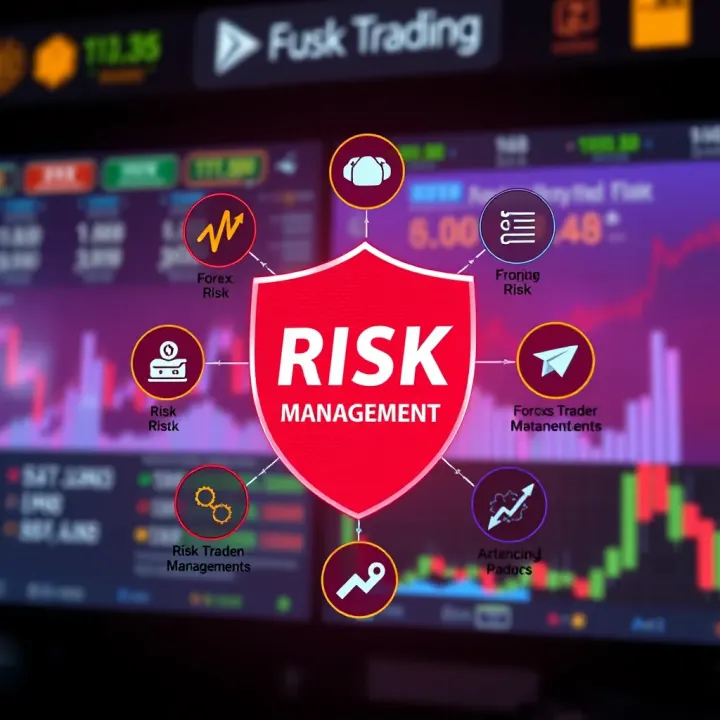
Risk management is the backbone of successful forex trading. Without it, even the most promising trades can wipe out your capital in no time. Managing risk effectively means knowing exactly how much you’re willing to lose on a trade, and sticking to that limit no matter what. This kind discipline helps protect your account from the inevitable downturns in the market and gives you a better shot at staying in the game long term.
A stop-loss order acts like a safety net for your trades. It’s an instruction to close a position automatically if the price moves against you by a certain amount. For example, if you bought the EUR/USD at 17.3000 and set a stop-loss at 17.2800, your loss caps at 200 pips. This prevents a small setback from turning into a devastating loss. It’s especially important in volatile markets like forex where prices can shift quickly.
Determining where to set your take-profit order requires some planning. This order closes your position once the price hits a target level, locking in profits before the market turns. Many traders use technical analysis to identify nearby support or resistance levels as natural take-profit points. Suppose the GBP/ZAR is trading at 21.5000, and you spot resistance around 21.7000; setting your take-profit just below that level can help you secure gains before a possible reversal.
Balancing risk and reward means allowing your potential profits to outweigh possible losses. A common rule is to aim for at least a 2:1 reward-to-risk ratio, meaning you seek to earn R200 for every R100 risked. This approach ensures that even if only half your trades are winners, you still come out ahead overall. So, if your stop-loss caps a loss at R100, your take-profit should aim for R200 or more. Sticking to this balance helps improve your chances of consistent profits.
Jumping into too many trades or letting emotions rule your decisions often leads to disaster. It’s tempting to chase losses or grab every opportunity, but overtrading drains your capital and clouds your judgment. For example, after a bad trade, some might hastily open several positions trying to recoup losses quickly, often worsening the situation. Maintaining a clear strategy and taking breaks when feeling stressed helps keep emotions in check.
Some traders skip setting stop-loss orders or use excessive leverage, dismissing risk rules in hopes of quick gains. This reckless approach can lead to catastrophic losses. Imagine trading USD/ZAR with high leverage without a stop-loss; a sudden market event could wipe out your account in minutes. Respecting risk limits and using protective orders is essential to lasting survival in forex trading.
A trading journal records your trades, strategies, emotions, and outcomes. It’s like a mirror showing what works and what doesn’t. By reviewing your journal, you can spot repeating mistakes, identify successful tactics, and refine your approach. For example, noticing that you repeatedly lose on trades placed during certain news events gives you insight to avoid those times. Keeping detailed notes cultivates discipline and improves your trading over time.
Managing risk isn’t just an add-on — it’s foundational. Without it, your chances of lasting in forex are slim. Set your limits, stick to them, and learn from each trade to steadily build confidence and control in the market.
Developing hands-on skills and expanding your knowledge base are essential steps in becoming a confident forex trader. Practical experience through demo accounts allows beginners to familiarise themselves with market dynamics and trading platforms without risking real money. This foundation makes the jump to live trading less daunting and reduces costly mistakes early on.
Demo accounts simulate real market conditions using play money, letting you test strategies and understand order execution. Practising this way helps you recognise how volatility impacts price movements and how to navigate platform functions like setting stop-loss or take-profit orders. It's the safest way to build muscle memory for trading decisions.
Demo trading is like a flight simulator for pilots — you get to practise landings and take-offs without crashing the plane.
Transitioning from demo to live trading requires discipline. Avoid rushing into live trades just because you had success in the simulation. Start with a small amount of capital, perhaps R500 or R1,000, to get used to the emotional side of trading real money. This approach helps manage the psychological impact of losses, which can’t be replicated in demo mode.
Consistency is key: stick to your tested strategies and record your trades in a journal. Over time, you’ll refine your approach, better understanding how to adjust to changing market conditions.
Reliable websites and forums dedicated to forex trading offer up-to-date insights and community support. Platforms like BabyPips provide beginner-friendly tutorials, while forums such as ForexFactory feature discussions on strategies and broker feedback. Keeping an eye on South African forums or groups can give you local context on brokers and regulatory changes.
Webinars and online courses add structure to your learning, often featuring experienced traders sharing real-world tips. These sessions can break down complex ideas like risk management or economic indicator analysis. Look for courses that focus on practical examples relevant to the South African market, such as how SARB policies influence currency pairs.
Staying informed about both South African and international market news is crucial. Economic developments like changes in interest rates by the South African Reserve Bank (SARB) or geopolitical events elsewhere can sway currency values sharply. Incorporate daily news checks from trusted sources, local business news, and financial reporting services to understand the broader market environment.
Regularly blending practice with education will help you keep up with forex markets, sharpen your skills, and boost your chances of trading successfully.
📉 Learn what margin means in forex trading, how it works with leverage, risks involved, and practical tips for South African traders staying within local rules.
Discover how forex trading robots work 🤖, their pros and cons, types, risk tips, and future trends to boost your trading decisions successfully 📈.
Discover how forex trading bots operate, their pros and cons, plus tips for South African traders on picking bots and managing risks 🤖📈 Start automating smartly today!
🖥️ Find the right laptop for your forex trading needs with tips on performance, multitasking, budget options, software essentials, and setup care tailored for South African traders.
Based on 13 reviews