
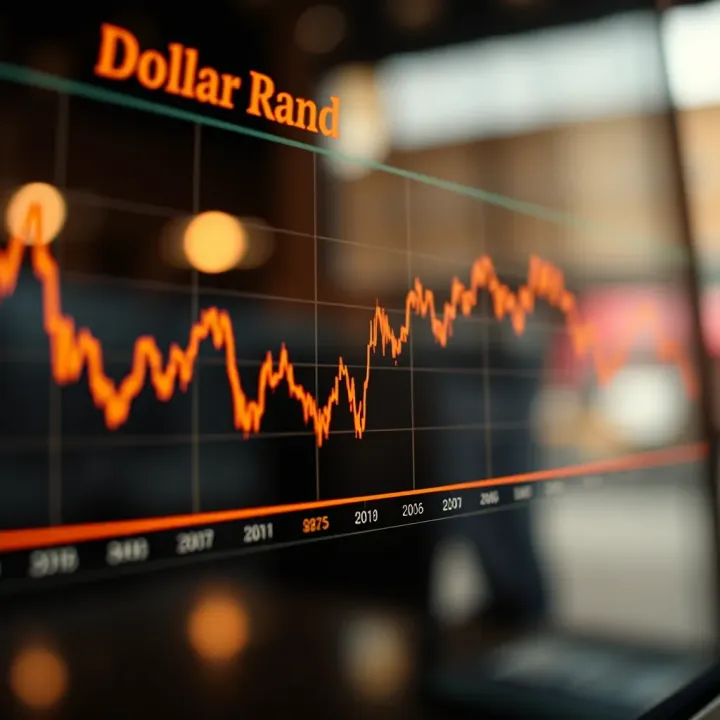
Dollar to Rand Exchange Rate: Trends and Outlook
Discover what drives the dollar to rand exchange rate 📊, including economic shifts, political events, and market mood, helping traders and businesses plan ahead. 🇿🇦💹
Edited By
Sophie Clarke
Navigating the Dollar to Rand exchange rate can feel like trying to predict the summer weather in Cape Town—unpredictable yet influenced by clear factors. Looking ahead to 2025, understanding what drives changes in this exchange rate is essential, especially for traders, financial analysts, and investors who depend on accurate foresight.
The Rand (ZAR) is notably sensitive to both domestic and international pressures. Locally, South Africa's economic health, political developments, and fiscal policy decisions play significant roles. For example, Eskom's frequent loadshedding affects business confidence and investor appetite, creating periodic volatility in the currency markets. Meanwhile, political events such as upcoming elections could induce risk-on or risk-off sentiments, impacting the Rand's value.
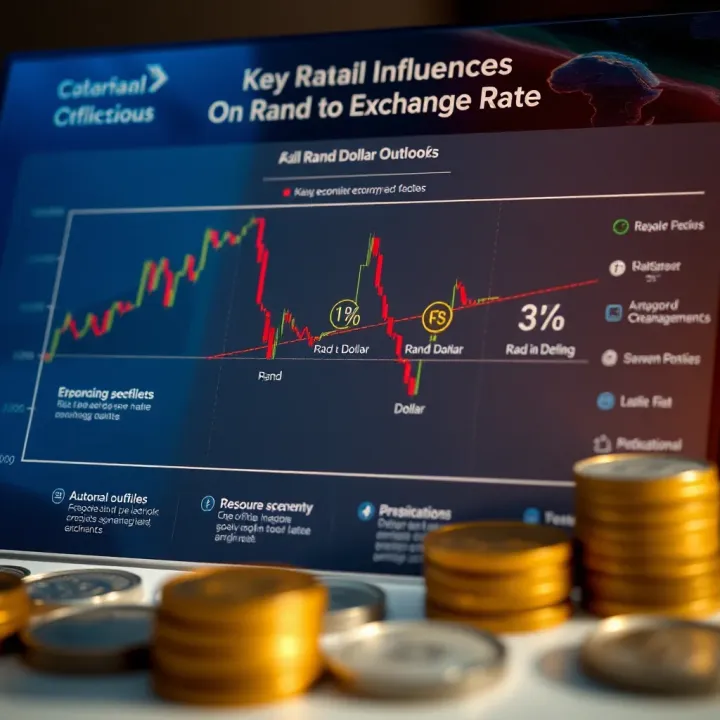
On the international front, the strength of the US Dollar (USD) depends heavily on Federal Reserve interest rate moves, inflation data, and broader global risk sentiment. Trade tensions or geopolitical unrest can push investors towards the dollar as a safe haven, tipping the exchange rate temporarily.
For practical planning, keeping an eye on both sets of factors can help you anticipate short-term fluctuations and position yourself appropriately.
Interest Rate Differentials: When South African Reserve Bank (SARB) interest rates diverge significantly from US rates, it sways capital flows, impacting the Rand.
Commodity Prices: South Africa’s export-heavy economy ties the Rand closely to metals and minerals prices such as platinum and gold.
Economic Data Releases: GDP growth figures, unemployment rates, and inflation reports send strong signals to currency markets.
Global Risk Appetite: Shifts in investor confidence, often due to events like US-China relations or oil price shocks, play a part.
Traders can use SARB signals combined with Federal Reserve updates to anticipate rate movements.
Investors should monitor commodity trends and political developments to hedge currency risks effectively.
Financial advisors may guide clients in building diversified portfolios that reduce exposure to Rand volatility.
In short, the Dollar to Rand exchange rate through 2025 will hinge on a blend of economic indicators, political events, and global financial moods. Being proactive rather than reactive is key to managing currency risk effectively in a market as dynamic as this.
Economic factors remain at the heart of what shapes the Dollar to Rand exchange rate. Understanding these elements helps traders, investors, and financial analysts make informed decisions. South Africa’s domestic economic health and the US monetary stance jointly pull the rate in different directions. Keeping tabs on these can give a clearer picture of potential movements come 2025.
South Africa’s gross domestic product (GDP) growth gives a snapshot of the economy’s momentum. Slow growth or contractions often weaken the Rand as investors seek safer or more lucrative markets. For example, the recent sluggish GDP growth around 1%–1.5% annually has become a cause for concern, as it limits business expansion and reduces foreign investment appeal. Conversely, any signs of recovery above 3% could provide support for the Rand.
Forecasts by the South African Reserve Bank (SARB) and independent analysts highlight that political stability, infrastructure investments, and reforms could push GDP growth modestly higher by 2025. These projections matter because a sturdier economy means better Rand demand and less volatility.
Unemployment remains stubbornly high, hovering near 33%, dampening consumer spending and dampening economic confidence. High jobless rates often feed into weaker currency sentiment as local demand contracts. Inflation, on the other hand, plays a dual role. Moderate inflation signals healthy demand but when it climbs too rapidly — above SARB’s 3%–6% target band — it pressures the central bank to hike interest rates, influencing foreign investment flows.
For instance, during periods when inflation jumped near 7% due to petrol price spikes or food costs hikes, the Rand experienced short-term volatility, especially as SARB’s rate hikes lagged behind global central banks.
Government policy shapes investor confidence strongly. Measures encouraging fiscal discipline, efficient public spending, and reforms in state-owned enterprises improve perceptions about South Africa’s economic future. The Broad-Based Black Economic Empowerment (B-BBEE) framework also factors in; companies compliant with B-BBEE codes are more likely to secure contracts and investments, reinforcing economic activity.
For foreign investors watching closely, political developments or policy uncertainty can trigger Rand weakness. In contrast, progress in reforms and transparent regulation tends to stabilise and even strengthen the Rand by fostering a more attractive business environment.
The US Federal Reserve's decisions on interest rates are major drivers of the US Dollar's value. When the Fed raises rates to tackle inflation, US assets become more appealing, pulling capital away from emerging markets like South Africa. This capital flow leads to Rand depreciation.
Recent hikes and forward guidance suggesting further tightening through 2025 mean South African investors and businesses should brace for periods of Rand volatility. For instance, when the Fed ramped rates aggressively in 2022, the Rand depreciated markedly, underlining this dynamic.
US inflation rates and government stimulus packages dictate demand and liquidity in the global economy. High inflation in the US reduces the Dollar's buying power but can trigger quicker Fed rate hikes, influencing global capital flows. Conversely, a reduction in stimulus measures tends to absorb liquidity, impacting emerging market currencies negatively.
Global investors factor these shifts into currency trading. If the US tightens too fast, South African borrowers in Dollars face costlier financing, creating ripple effects in the economy and exchange rate.
The US Dollar remains the world’s reserve currency, and global demand for it fluctuates with geopolitical events, trade cycles, and market sentiment. In times of global uncertainty, capital seeks the safety of the Dollar, often at the expense of emerging currencies like the Rand.
Events such as trade tensions between major powers or economic slowdowns overseas could bolster the Dollar’s strength. For South Africa, this often means a weaker Rand, especially when export earnings suffer due to subdued global demand. Investors keep a sharp eye on these global dynamics, adjusting their positions accordingly.
The Dollar to Rand exchange rate is a complex dance between domestic economic fundamentals and international financial forces, making it essential to track both local conditions and US economic policies carefully.
In practice, this means South African businesses, importers, and investors should prepare for fluctuations by monitoring GDP updates, inflation data, Fed announcements, and global risk signals regularly.
South Africa’s GDP growth and political reforms
Local inflation and unemployment trends
Fed interest rate moves and US inflation data
Global risk appetite influencing Dollar demand
Understanding these factors can guide smarter strategies for currency management and investment decisions as we head into 2025.
Global events significantly shape the Dollar to Rand exchange rate by influencing market confidence, trade flows, and risk appetite. For South African traders and investors, recognising how external factors like commodity price swings or geopolitical tensions affect the Rand is key to navigating exchange rate volatility. These events often trigger immediate shifts in capital movements and currency demand, making their practical understanding essential for managing exposure and timing transactions.
South Africa's economy leans heavily on commodities such as gold and platinum. These exports bring in crucial foreign currency, so fluctuations in their prices directly affect the Rand's strength. For instance, when gold prices rise, mining revenues increase, supporting the Rand through improved trade balances. Conversely, a slump in platinum prices, driven by shifts in global demand or production disruptions, tends to weaken the Rand as export earnings decline.
This linkage means businesses involved in mining or related industries must monitor commodity markets closely. For example, a mining company planning capital investments may delay decisions if global platinum prices look bearish. Equally, forex traders track commodity trends as a bellwether for Rand performance, anticipating currency moves that reflect changing export income.
Oil prices also play a pivotal role since South Africa imports most of its petrol and diesel. Rising oil costs increase import bills, placing downward pressure on the Rand by widening the trade deficit. This effect was visible during spikes in Brent crude in 2022, which translated into rand depreciation.
Higher oil prices also raise fuel and transport costs within South Africa, feeding into inflation and potentially prompting tighter monetary policy from the South African Reserve Bank (SARB). The ripple effect influences investor sentiment, as uncertainty around inflation and policy shifts can increase Rand volatility.
Tensions between major economies, such as the US and China, have a knock-on effect on the Dollar to Rand rate. When trade disputes escalate, global markets tend to turn risk-averse, favouring the US Dollar as a safe haven. This pattern often results in Rand weakness, as emerging market currencies typically suffer amid such uncertainty.
South Africa's positioning as a trading partner also comes into focus here. Key trade links with China mean any slowdown or policy shifts there impact South African exporters and currency flows. Similarly, relationships within the African Continental Free Trade Area (AfCFTA) and with European Union countries influence the Rand by affecting trade volumes and diversification of export markets.
Broadly, ongoing geopolitical risks—ranging from Brexit aftershocks to regional conflicts—fuel global economic uncertainty. This uncertainty discourages investment in riskier assets like the Rand. During times of heightened global unpredictability, expect increased volatility in the exchange rate.
Understanding global events helps traders and investors anticipate Rand movements, enabling better risk management and more informed decision-making.
In summary, commodity prices and geopolitical developments are not abstract concerns but active drivers of the exchange rate that impact South African business and investment strategies. Staying abreast of these factors offers practical benefits in planning ahead for currency fluctuations in 2025 and beyond.
Market sentiment and investor behaviour play a significant role in shaping the dollar to rand exchange rate. Investor confidence, risk appetite, and perceptions about South Africa’s economic prospects influence demand for the rand. This, in turn, drives capital flows and affects currency volatility, making it critical for traders and financial analysts to track shifts in sentiment closely.
Portfolio investment reflects investors buying and selling South African stocks, bonds, and other financial assets. When foreign investors see attractive returns or economic stability, they tend to increase these investments, lending strength to the rand through higher demand. Conversely, if there’s political uncertainty or global risk-off sentiment, portfolio outflows can weaken the currency rapidly. For instance, during periods of Eskom load-shedding announcements, there have been notable sell-offs in South African equities by foreign portfolio investors, which caused brief rand depreciation.
FDI involves longer-term investments in South African businesses or infrastructure. While this inflow is generally less volatile than portfolio investment, shifts in FDI can signal broader confidence in the economy’s fundamentals. Recent trends in sectors like renewable energy and technology indicate growing interest, which bodes well for the rand’s stability over time. However, concerns such as delayed infrastructure projects or regulatory hurdles might slow FDI growth, affecting foreign currency demand for capital projects.
Forex traders, including hedge funds and banks, actively speculate on the dollar-rand rate, especially given the rand’s historical volatility. Their trades can amplify short-term movements, as seen during global risk events or sudden policy changes. For example, forex traders often react swiftly to SARB (South African Reserve Bank) signals about interest rate changes, causing rapid swings. Understanding their behaviour can help investors anticipate and manage sudden price jumps.
South Africa maintains exchange controls that regulate capital movement to curb excessive volatility and protect the economy. These rules can influence how freely investors can move funds in or out, indirectly impacting the dollar-rand rate. While reforms in recent years have eased some restrictions, the regulatory environment remains an important consideration. For instance, stringent rules on outward remittances during heightened volatility periods may reduce rand sell-offs, providing temporary support to the currency.
Tracking market sentiment and investor behaviour offers practical insights into short- and medium-term rand fluctuations, helping traders and investors plan more effectively around exchange rate risks.
In summary, the interplay of capital flows, speculative trading, and regulatory frameworks forms a key part of the rand’s outlook. Keeping an eye on these factors alongside economic fundamentals prepares market participants to navigate shifts in the dollar-rand exchange rate through 2025.
Forecasts and expert predictions play a key role in shaping expectations around the Dollar to Rand exchange rate for 2025. For traders and investors, knowing where the R/$ rate might head helps with making informed decisions — from hedging strategies to timing capital flows. Predictive insights also assist financial analysts in advising clients on currency risk and spotting emerging opportunities or vulnerabilities in the South African economy.
Experts generally agree that the Dollar to Rand exchange rate will fluctuate within a certain range next year. Current forecasts hover between R17.50 and R19.00 to the Dollar, depending on prevailing economic conditions and global trends. This range gives businesses and investors a useful yardstick for planning, particularly when handling imports, exports, or foreign investments.
The practical value here is clear: if you expect the Rand to weaken towards R19, you might accelerate purchases of imported goods or secure currency hedges earlier. On the other hand, if the Rand strengthens near R17.50, there may be less urgency to lock in exchange rates now.
Diverging views mainly arise from different assessments of key factors like commodity prices, US Federal Reserve policy, and South Africa’s political landscape. Some analysts take a cautious stance, anticipating more volatility due to ongoing Eskom loadshedding and political uncertainty. Others are cautiously optimistic, banking on reforms to improve investor confidence and a stabilising global economy.
These contrasting perspectives remind us that while consensus sets a useful expectation, currency predictions require constant review and adaptation. Seeing where forecasts align or differ helps identify underlying risks and opportunities.
Eskom loadshedding and economic impact: Loadsheding remains a significant drag on South Africa’s economic output. Unscheduled or prolonged power cuts can hit industrial production and service delivery, undermining business confidence and weakening the Rand. A deeper or extended loadshedding cycle in 2025 could push the exchange rate towards the weaker end of forecasts.
Political developments in South Africa: Political stability profoundly affects investor sentiment. Policy shifts following elections or major legislative changes related to B-BBEE, land reform, or regulatory enforcement could unsettle markets. Should political tensions rise, especially with uncertainties ahead of the 2024 general elections, the Rand could suffer more volatility.
Global recession or recovery scenarios: The broader international outlook also plays a big role. A global recession triggered by inflationary pressures or geopolitical tensions would dampen demand for South African exports and raise demand for the US Dollar as a safe haven. Conversely, a steady recovery globally could improve risk appetite, lifting the Rand as capital flows back into emerging markets.
Keeping track of these risks is essential for any participant in the Forex market dealing with the Dollar-Rand pair. Proactive risk management and staying abreast of economic and political currents will be key to navigating 2025 successfully.
Understanding forecasts alongside these risks provides a fuller picture for anyone exposed to currency movements — helping to prepare for shifts and capitalise on likely trends.
Planning is essential when dealing with the dollar to rand exchange rate, especially given the currency’s volatility. For traders, investors, businesses, and even everyday consumers, anticipating currency fluctuations can help minimise costs and optimise returns. Being proactive allows you to avoid costly surprises; for example, a South African importer locking in a rate before the rand weakens might save thousands, while an investor timing currency conversion carefully can protect the value of their portfolio.
Businesses importing goods or services can reduce the uncertainty of exchange rate swings by using hedging instruments. Tools such as forward contracts, options, and swaps are offered by South African banks and brokers to fix an exchange rate today for a future transaction. For instance, a manufacturing company purchasing machinery priced in dollars can enter a forward contract to secure the current rate, shielding budgets against rand weakness. This also helps with cash flow planning, as payment amounts become predictable despite market shifts.
Timing when you pay foreign suppliers or receive payments in dollars matters. If the rand is strong, deferring dollar payments to take advantage of better rates can save costs. Conversely, when the rand weakens unexpectedly, making payments earlier might avoid higher expenses. Importers often monitor exchange rate trends closely to choose the optimal moment. Similarly, exporters could decide when to convert dollar earnings to rands, potentially gaining more local currency during favourable exchange movements. This kind of currency timing requires careful attention but can add real value in operational planning.
South Africans travelling abroad or shopping online in foreign currency face exchange risks too. Booking flights or holiday packages in advance when the rand is relatively strong can avoid more expensive foreign currency rates later. Similarly, using traveller’s prepaid cards or loading forex wallets when rates are favourable reduces the impact of daily rand fluctuations. For everyday middle-class consumers buying imported electronics or luxury goods, hedging is less accessible but timing purchases during rand strength periods helps protect buying power.
For investors, the dollar to rand rate influences not only currency portfolios but also stocks, bonds, and property. A weakening rand can boost the local value of dollar-denominated investments, but it may also signal broader economic risks. Export-oriented companies listed on the JSE might benefit from a weaker rand, potentially improving their earnings in rand terms. Conversely, companies reliant on imported inputs could see margin pressure. Understanding how exchange rate moves interact with specific sectors or instruments can guide smarter allocation decisions.
Effective planning around dollar to rand movements is not just about protecting against losses but making strategic choices that can enhance profitability and reduce uncertainty across different financial activities.
Overall, knowing when and how to navigate exchange rate changes equips businesses and individuals in South Africa with a valuable edge in a fluctuating market. Timing, proper hedging, and awareness of exposure nuances are all worthwhile considerations.
Discover what drives the dollar to rand exchange rate 📊, including economic shifts, political events, and market mood, helping traders and businesses plan ahead. 🇿🇦💹
💱 Discover how economic trends, politics, and market shifts shape the Rand-Dollar exchange. Get expert tips to manage currency changes confidently.
📉 Explore detailed Rand to Dollar exchange rate trends, key economic factors, and market insights to help South African investors and businesses manage currency risks effectively.
📉Stay updated on Rand to USD trends this week! Explore factors behind changes, compare past data, and get tips for managing fluctuating exchange rates in SA.
Based on 5 reviews