
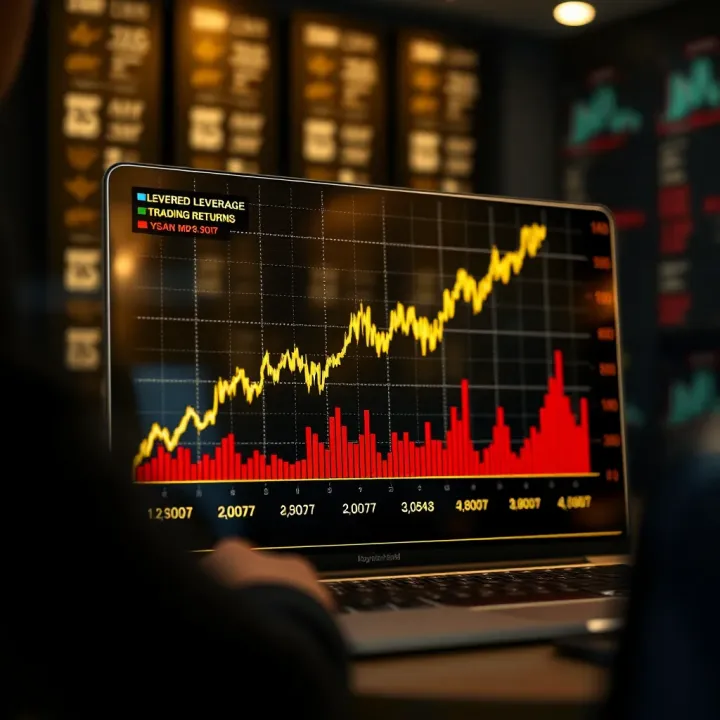
Understanding Leverage in RCG Markets for South African Traders
📊 Discover how leverage works in RCG Markets, its effects on trades, risks, and key regulations. Get practical tips for smart trading in South Africa!
Edited By
Isabella Turner
Derivative leverage allows investors to control large positions in financial markets while committing only a small fraction of the total trade value. This principle is common in instruments such as futures, options, and contracts for difference (CFDs), where only an initial margin is required upfront. For South African traders dealing in indexes like the JSE Top 40 or commodities like gold and platinum, leverage can amplify both profits and losses dramatically.
Understanding how leverage works is critical. Take a futures contract on the South African rand-dollar exchange rate. Instead of paying R1 million to purchase the underlying, you might only need to put down R50,000 as margin. This means your exposure is 20 times your capital, but any adverse move can quickly erode your margin and may require additional funding to avoid liquidation.
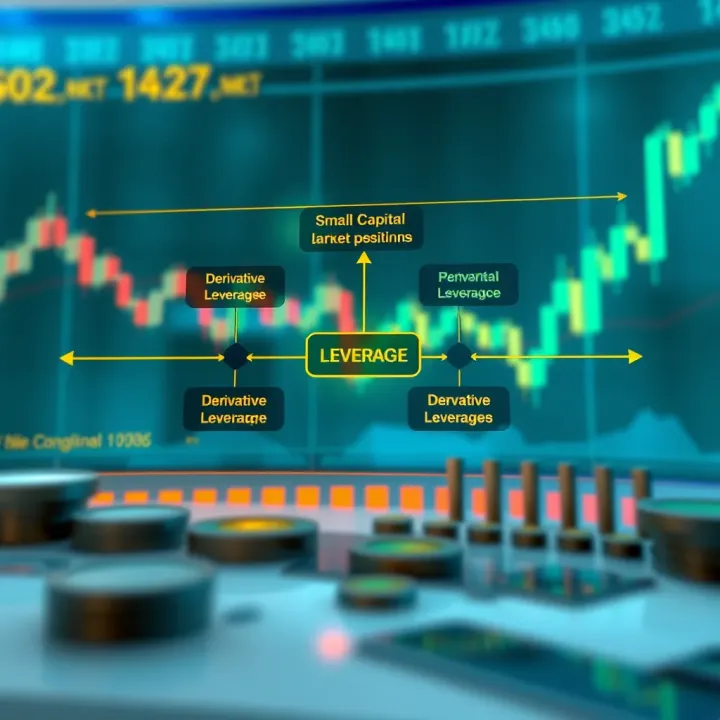
Leverage magnifies gains and losses equally, so careful risk management and awareness of margin calls are essential for anyone trading derivatives.
The impact of leverage on financial markets is significant. It can increase liquidity and allow for more efficient price discovery, but it also raises volatility and systemic risk. When many traders use high leverage, market swings may become exaggerated, potentially destabilising asset prices beyond what fundamentals suggest.
In South Africa, the regulatory environment around derivative leverage is controlled by the Financial Sector Conduct Authority (FSCA). They set limits on leverage ratios for retail clients and require brokers to provide transparent risk disclosures. This regulatory stance aims to protect less experienced investors from the pitfalls of excessive leverage, especially during periods of economic uncertainty or Eskom-induced market jitters.
For traders and advisors, practical steps include:
Assessing your risk tolerance before committing leverage
Keeping close track of margin requirements and account levels
Using stop-loss orders to limit downside exposure
Staying informed about local market conditions such as currency fluctuations or load-shedding impacts
By balancing the benefits and pitfalls of derivatives leverage, South African investors can position themselves to make calculated bets without exposing themselves to ruinous losses.
Derivative leverage is a fundamental concept that allows investors and traders to control larger market positions with a smaller amount of capital. This approach is especially relevant in South Africa, where access to sizeable capital might be limited, yet market opportunities abound. By using derivatives, one can potentially boost returns without needing the full value of an underlying asset upfront. However, this benefit comes with the flip side of increased risk, making it essential to understand the mechanics before diving in.
For example, a retail investor using R10,000 could effectively manage exposure worth R100,000 through leverage, amplifying both potential gains and losses. This hands-on method helps optimise capital but demands careful risk management and market knowledge to avoid blown-up accounts.
Definition of derivatives: Derivatives are financial contracts whose value depends on the price of an underlying asset such as stocks, bonds, commodities, or currencies. They can come in the form of futures, options, swaps, or contracts for difference (CFDs). What makes derivatives stand out is that trading them doesn't require owning the underlying asset outright. Instead, you make agreements based on its expected price movements, opening paths for speculative or hedging strategies.
In practice, derivatives enable market participants to cover risks or attempt to profit from price changes without huge capital outlay. For instance, a producer of maize might use futures contracts on the JSE Agricultural Derivatives Market to lock in prices ahead of harvest, protecting against price drops.
How leverage amplifies exposure: Leverage in derivatives means you control a bigger market value relative to the actual capital you invest (known as margin). If you put down 10% margin on a contract, you effectively gain 10 times exposure. This can turn modest price moves into meaningful profits—or substantial losses.
Take an option contract on a blue-chip stock where you pay R2,000 for rights over shares worth R20,000. If the share price climbs by 5%, your profit could be significantly larger in percentage terms, compared to buying the shares outright. Yet, if the market moves against you, your entire margin could vanish faster than in unleveraged trades.
Futures and options: Futures contracts obligate parties to buy or sell an asset at a predetermined price and date. Because only a fraction of the contract value is needed upfront as margin, futures are widely used for leveraged trading. Options give the right (not obligation) to buy or sell, providing leverage with limited risk to the premium paid. For instance, a trader buying call options on domestic shares can benefit from upward price moves with limited downside if the option expires worthless.
Swaps and forwards: Swaps typically involve exchanging cash flows between counterparties based on different financial metrics like interest rates or currencies. While over-the-counter (OTC) instruments, they can involve considerable leverage depending on notional amounts. Forwards are customised contracts similar to futures but less standardised. South African companies use swaps to hedge borrowing costs or currency exposures without immediate cash changes.
Contracts for difference (CFDs): CFDs let traders speculate on price changes without owning the underlying asset. They are highly leveraged since a small margin covers a larger position. South African retail traders use CFDs to access share price movements or indices efficiently, but the rapid swings can be risky without tight risk controls.
Understanding each derivative’s structure and how leverage behaves in different products is key for South African market participants to balance opportunity with risk exposure effectively.
Understanding how leverage functions is key when trading derivatives. It hinges largely on margin requirements and the capital you need upfront to take a position. Margin isn't the full cost of the trade but a fraction, allowing you to control much larger exposures with relatively small capital. For example, if the margin requirement is 10%, you only need to deposit R10,000 to control assets worth R100,000.
This practical setup improves capital efficiency. Traders don’t have to commit their entire investment capital to a position but can spread it across multiple trades or other assets. This approach frees up funds to diversify or react to market changes. In South African markets, such as on the JSE, this means investors can remain agile without tying up too much cash. However, the flip side is that your gains and losses multiply relative to the margin, not the total value.
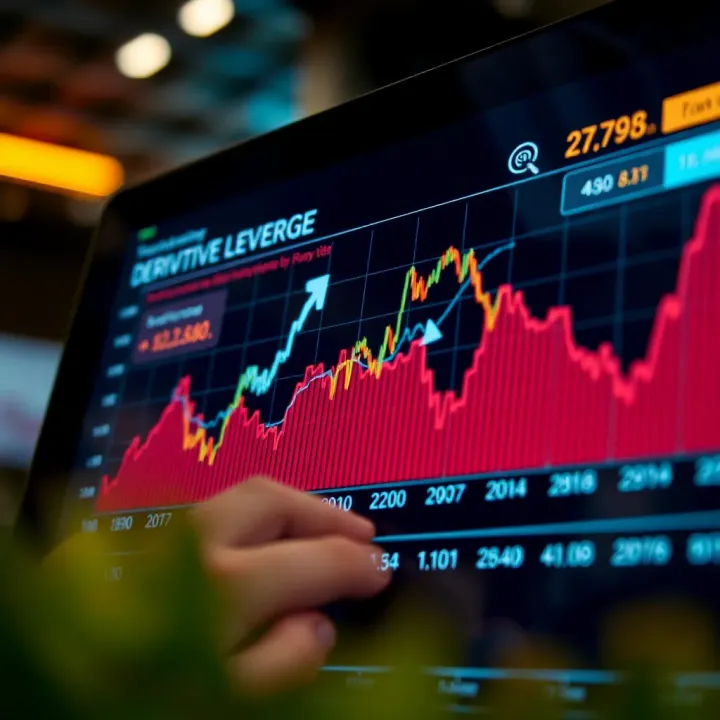
Margin is essentially a security deposit to cover potential losses and ensure parties meet contractual obligations. When you buy a futures contract on the JSE, for instance, you pay an initial margin upfront, often around 5-15% depending on the volatility and underlying asset. This margin fluctuates as the market moves, and you may need to add funds if losses exceed the initial cushion.
What makes this important is avoiding margin calls and liquidation of your position if you can’t meet the requirements. Failing to top up your margin may force the broker to close your positions to limit risk, sometimes at a loss far beyond your original investment.
By only paying the margin, your capital works harder. Instead of using R100,000 to buy shares outright, you might control that exposure with just R10,000-15,000 of margin. This efficiency means you have more room to take other positions, spread risk, or hold reserves for hedging.
Yet, high capital efficiency doesn’t come without caveats. The more leveraged you are, the more sensitive your capital is to market moves. Even a small adverse price shift can erode your margin and trigger additional funding requirements or forced closures.
Leverage ratios indicate how much exposure you control relative to your invested capital. A leverage of 10:1 means you control 10 times the cash you've actually put up. In South African derivative trading, typical leverage multiples range from 5x to 20x, depending on the product and broker.
For example, with R5,000 margin, a 10:1 leverage lets you control R50,000 worth of an asset. This amplifies both profit and loss potential.
Leverage magnifies returns because gains apply to the total exposure, not just your margin. If the asset value rises 5%, a 10:1 leveraged position yields 50% on your invested capital. But the same goes for losses — a 5% dip wipes out half your margin, and a bigger move can mean losing everything and more.
In summary, the mechanics of leverage shape how investors allocate capital, manage risk, and pursue returns in derivative markets. A sound grasp of margin rules and leverage ratios helps you trade smarter, especially under South African market conditions where volatility and regulatory factors come into play.
Leverage through derivatives offers a double-edged sword for investors—while it can boost returns significantly, it also amplifies the risks involved. Understanding this balance is crucial, especially for traders and financial advisors working within South African markets where volatility and regulatory shifts are common.
Leverage magnifies profits by allowing investors to control a large position with a fraction of the total value. For example, if you invest R10,000 with a leverage ratio of 10:1, you effectively control a R100,000 position. If the asset moves favourably by 5%, your profit on the leveraged position is R5,000—an actual 50% return on your initial capital. This mechanism means even small market movements can translate into substantial gains.
However, this works best in scenarios where market trends are clear and volatility is manageable. Leveraged trades suit investors who have a good grasp of market timing or want to capitalise on short-term opportunities, such as expecting a listed company’s share price to rise after a positive earnings report. Leverage is often used in derivative trading during economic event reactions or expected price shifts on commodities relevant to South Africa, like gold or oil.
On the flip side, margin calls and liquidation risks pose significant threats. If the market moves against your position, losses accumulate quickly, and your broker may require additional funds to maintain the trade—this is the margin call. Failure to respond promptly can lead to forced liquidation of your positions, potentially locking in heavy losses.
Volatility exacerbates this problem. In volatile conditions, price swings can trigger stop-outs unexpectedly. For example, during periods of heightened uncertainty—say, around political developments or Eskom loadshedding announcements—prices can swing sharply, wiping out leveraged gains and accelerating losses. This magnified downside risk means investors must be vigilant and prepared to manage the volatility.
Setting stop-loss orders is a practical way to curb losses. A stop-loss automatically exits your position once a specified price level is reached, protecting against further downside. In South African markets, where sudden shifts can occur due to local factors, stop-losses help traders limit damage without constant monitoring.
Besides this, diversification and position sizing are critical. Spreading your leveraged trades across different sectors or assets can reduce the impact if one position turns south. Also, keeping the size of each leveraged position within a manageable portion of your total portfolio guards against catastrophic losses. For instance, limiting any single trade to no more than 10% of your capital helps ensure you aren't overexposed.
Leveraged derivatives can be powerful tools, but they demand disciplined risk management and thoughtful application to help South African investors navigate market ups and downs effectively.
Derivative leverage doesn’t exist in a vacuum—regulatory frameworks and market mechanisms shape how it functions and impacts both traders and the wider financial landscape. Understanding these frameworks is crucial, especially for investors in South Africa where local and global rules interact. These considerations help balance the opportunities leverage offers with the potential for significant risks.
The Financial Sector Conduct Authority (FSCA) oversees the regulation of financial markets in South Africa, including derivatives trading. The FSCA’s rules aim to ensure transparency, protect investors, and promote market stability. They set out strict guidelines on how leverage can be offered and managed by financial service providers, especially concerning retail investors. For example, regulations may limit the maximum leverage retail traders can access to reduce the chance of outsized losses.
Practical relevance lies in investor protection and market confidence. Knowing the FSCA’s stance helps traders understand the limits placed on their trades and the safeguards they can expect from brokers. It’s common for FSCA-licensed brokers to require detailed disclosures on leverage risks and enforce margin requirements fitting local standards.
The Johannesburg Stock Exchange (JSE) plays a significant role in shaping derivative trading in South Africa. It provides a regulated platform where futures and options contracts are listed and traded under strict rules. The JSE’s oversight ensures product standardisation, fair pricing, and clear settlement procedures, all of which are essential for managing leverage risks efficiently.
For instance, the JSE enforces margin requirements on derivative contracts which prevent traders from taking on excessive risk. This helps stabilise the market—especially important given South Africa’s experiences with volatility and economic uncertainty. Thus, investors relying on JSE-traded derivatives benefit from a structured environment designed to reduce counterparty and systemic risks.
Many global markets have introduced caps on the amount of leverage retail investors can access, often driven by regulators like ESMA in Europe or ASIC in Australia. These limits typically reduce leverage ratios significantly, sometimes capping them as low as 1:30 for forex trading and lower for other derivatives.
This global trend has strayed into South African territory as well, influencing local brokers who offer international products. The practical effect is a safer trading environment for less-experienced investors by curbing the chances of catastrophic losses. It also encourages traders to approach leverage more cautiously, aligning their strategies with their risk appetite and investment goals.
An ongoing trend worldwide is the push for greater transparency in derivative markets. Authorities demand comprehensive reporting on derivative exposures, both from brokers and investors, to monitor systemic risks and spot unhealthy leverage build-ups early.
In practice, this means traders and brokers must keep detailed records and comply with stringent reporting standards. This openness benefits the entire financial system by building trust and enabling regulators to act swiftly if warning signs arise. South African participants dealing in global derivatives markets often face these transparency rules, making compliance a key factor in cross-border trading.
Far from being mere red tape, these regulatory and market considerations act as guardrails. They guide how derivative leverage is used, protecting individual investors and the broader financial markets from excessive risk and instability.
By keeping an eye on these rules and evolving market conditions, investors can navigate derivative leverage more confidently and responsibly.
For South African investors, understanding practical ways to use derivative leverage can make a big difference between smart trading and costly mistakes. Leverage offers a chance to increase potential returns but also raises risks, especially in volatile markets like ours that face unique challenges such as loadshedding and currency fluctuations.
Before diving into leveraged derivative trades, it pays to honestly assess your financial position, experience, and comfort with risk. A self-assessment helps identify whether you can stomach potentially large swings in your investment value. For example, if you’re relying on the capital for near-term expenses, using high leverage could put you in trouble when markets go south.
Matching your appetite for risk with your investment goals is equally vital. If your goal is steady long-term growth, high-leverage positions may not align well. Conversely, if you aim for short-term speculative gains and have the financial cushion to cover possible losses, carefully calibrated leverage can work. South African markets can be wild at times, so knowing your limits upfront prevents rash decisions under pressure.
Working with reputable brokers authorised by the Financial Sector Conduct Authority (FSCA) gives you a safety net. Regulatory oversight ensures brokers meet minimum standards and comply with rules designed to protect investors. Avoid platforms with unclear licensing—especially many international brokers targeting South Africa without proper registration.
Choosing between local and international derivatives depends on your needs. Local instruments on the Johannesburg Stock Exchange (JSE) may have tighter regulations, better liquidity for certain products, and settlement systems you trust. International derivatives, meanwhile, offer access to global markets but involve currency risk and sometimes less transparent practices. For instance, trading a CFD on an international tech stock from your home in Cape Town might expose you to exchange rate swings on top of market risks.
Market volatility in South Africa is often linked to external shocks and internal challenges. Staying on top of your leveraged positions is non-negotiable: don’t set and forget. For example, when Eskom moves to stage 4 loadshedding, financial markets can react sharply — your positions might need urgent attention to avoid margin calls.
Using real-time monitoring tools is essential. Many brokers provide platforms with live pricing, alerts, and risk management features. Mobile apps with push notifications enable you to respond swiftly when conditions shift. As an example, setting alerts for price levels on your derivatives can signal when it’s time to adjust stop-loss orders or take profits. These simple actions help control risk and lock in gains.
Staying informed and actively managing your derivative leverage positions helps South African investors navigate risks and opportunities responsibly, especially in a market with unique local dynamics.
📊 Discover how leverage works in RCG Markets, its effects on trades, risks, and key regulations. Get practical tips for smart trading in South Africa!

📊 Learn how stock indices reflect market moves in South Africa and globally, their makeup, and why they matter for investors and the economy. 🌍
Explore Squared Financial's unique services, security protocols, fee details, and its role in South Africa's financial sector. Learn what to consider before joining 💼📊

📉 Learn how derivative trading works in South Africa: key contracts, risks, uses, plus local regulations to help you trade smart and manage your financial exposure effectively.
Based on 12 reviews