
Forex Trading PDFs Guide for South African Traders
📘 Discover how to use forex trading PDFs to boost your skills with clear, practical tips for South African traders keen on smarter, informed trading decisions.
Edited By
Charlotte Bennett
Forex trading online involves buying and selling foreign currencies through digital platforms, aiming to profit from changes in exchange rates. For South African traders, this market opens up 24-hour access to global currency pairs like USD/ZAR or EUR/USD, allowing participation beyond local financial markets.
The South African Reserve Bank (SARB) oversees currency regulation, while the Financial Sector Conduct Authority (FSCA) supervises brokers. Knowing the role of these institutions helps you choose compliant platforms and avoid scams. For example, platforms regulated by FSCA provide an extra layer of protection that unregistered brokers lack.
Trading forex online requires a solid grasp of market movements and strategies. Popular approaches include day trading, where positions are opened and closed within the same day, and swing trading, which holds assets over several days. Given the volatile nature of the rand, traders often focus on managing risk carefully—stop-loss orders and position sizing are common methods to limit possible losses.
When selecting an online broker, South African traders should consider factors like:
FSCA regulation status
Trading fees and spreads
Available currency pairs, including the ZAR
Platform usability and educational resources
Access to mobile apps for trading on the go
South African traders need to factor in costs like currency conversion and possible bank charges when depositing or withdrawing funds.
Market hours also affect strategy. The main forex trading sessions include Asian, European, and North American. Because of South Africa’s time zone (SAST), peak trading often aligns with the London and New York sessions—times when liquidity peaks and spreads narrow.
Ultimately, understanding forex trading online means combining knowledge of global market dynamics with local compliance and practical trading tools. It’s wise to begin with demo accounts offered by brokers such as Plus500 or IG Markets to familiarise yourself without financial risk before committing real capital.
This overview sets the stage for a more detailed look at platforms, strategies, and local nuances that shape successful forex trading in South Africa.
Understanding the basics of forex trading is essential before stepping onto online platforms. This knowledge equips you with a clear picture of how currency markets operate and what to expect when trading. For South African traders, it’s especially helpful to grasp how foreign exchange (forex) works because it affects everyday things like the rand’s value against the US dollar or euro.
Definition of forex trading: Forex trading involves buying one currency while simultaneously selling another, aiming to profit from changes in exchange rates. For example, if you believe the rand will strengthen against the dollar, you might buy ZAR/USD expecting to sell it later at a better rate. Traders make money by speculating on these currency moves without necessarily owning physical money.
How currency pairs function: Currencies are quoted in pairs, like EUR/USD or USD/ZAR, showing how much of one currency you need to buy one unit of another. The first currency is the base, the second is the quote. In the EUR/USD pair, if the rate is 1.15, it means one euro costs 1.15 US dollars. Understanding this helps traders decide when to buy or sell based on expected currency value shifts.
Market participants: The forex market includes banks, corporations, hedge funds, retail traders, and central banks. Banks might trade large volumes for clients or themselves, while retail traders in South Africa use online platforms to participate with smaller amounts. Central banks sometimes intervene to stabilise their currency. Knowing who else is in the market helps in understanding price movements and liquidity.
Popular platforms used in South Africa: South African traders often use platforms like MetaTrader 4/5, IG, and Plus500. These platforms provide access to major currency pairs and local favourites including USD/ZAR. Their widespread use is due to user-friendly interfaces and availability of market tools tailored for both newbies and experienced traders.
Key features to look for: A good forex platform should offer real-time price quotes, charting tools, and secure trade execution. Access to different order types and easy withdrawal options are vital. Additionally, look for platforms regulated by the Financial Sector Conduct Authority (FSCA) to ensure compliance and safety.
How to set up an account: Opening a forex trading account usually involves registering online, providing identification documents (ID, proof of address), and linking a bank account for deposits and withdrawals. South African platforms may require proof under FICA (Financial Intelligence Centre Act) rules. After verification, you can fund your account and start trading.
Getting familiar with the basics and platform functions reduces mistakes and helps set realistic trading goals, increasing your chance of success in forex markets.
Delving into forex trading without a solid grasp of key strategies is like setting out on a trip without a map. For South African traders, understanding foundational tactics unlocks better decision-making, reduces risks, and sharpens timing. This section looks at two major tools—fundamental and technical analysis—and key risk management techniques you'll want in your toolkit.
Economic indicators are like the heartbeat of global economies, revealing shifts that impact currency values. For instance, the South African Reserve Bank’s (SARB) interest rate decisions can sway the rand (ZAR) quickly. By keeping an eye on inflation rates, GDP figures, or employment stats from South Africa and key partners like the US or China, traders can gauge when currencies might strengthen or weaken.
Consider when the SARB raised rates unexpectedly to curb inflation—such moves typically boost the rand’s appeal, attracting forex demand. Thus, matching trading actions with these economic signals can lead to smarter timing and better entries.
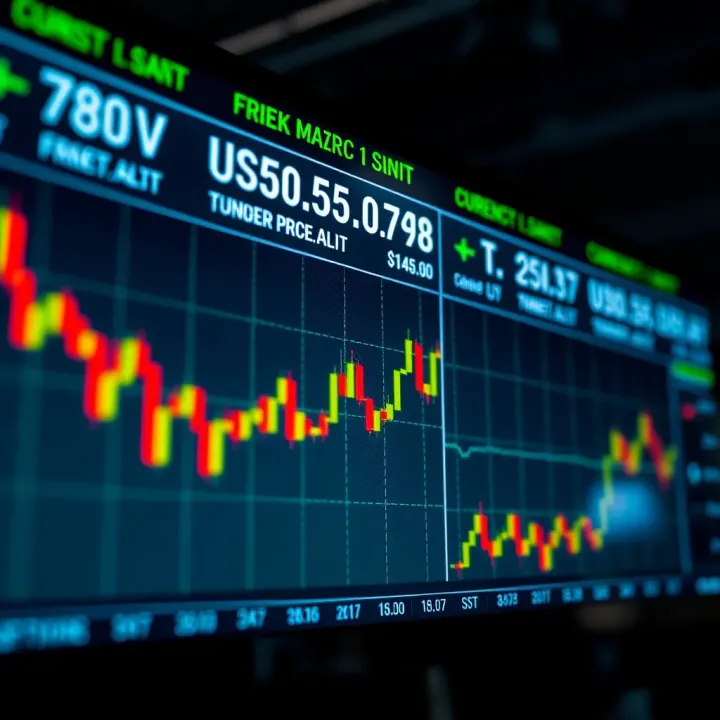
Charts are the bread and butter for technical analysis. They plot past price movements, helping you spot patterns and trends that hint at future market action. For example, if the USD/ZAR pair shows a consistent uptrend over weeks, you might anticipate the dollar to keep gaining strength.
Chart tools like moving averages or Relative Strength Index (RSI) help confirm these trends. A simple approach could be observing support and resistance levels—price points where a currency pair has repeatedly bounced back or stalled. If USD/ZAR nears a historical support level, traders often prepare for a possible reversal or strong bounce upwards.
Stop-loss orders are your safety net against major losses. They automatically close a trade once the price reaches a set level, limiting how much you can lose. For new traders especially, this prevents emotions from taking over when the market moves against you.
For example, if you buy EUR/USD at 1.1000, you might set a stop-loss at 1.0950, capping your loss at 50 pips. This makes sure that one trade doesn't wipe out your gains or capital, a vital tactic for preserving your trading account over time.
Setting stop-loss orders isn’t about avoiding losses altogether—it’s about controlling where and how much you lose.
Leverage lets you control a larger position with a small portion of your own cash. While it increases potential profits, it also magnifies losses—at times, quite sharply. For South African traders, brokers often offer leverage up to 1:100, but using maximum leverage without caution is risky.
A better plan is to keep position sizes small relative to your account balance. Say you have an account of R10,000; risking only 1–2% per trade (R100 to R200) is wise. This way, even a string of losses won’t drain your account. Managing leverage carefully helps you trade longer and learn more without facing a quick blowout.
In short, smart trading hinges on combining market analysis with strict risk discipline. By understanding the basics of economic indicators, price charts, and how to manage risk with stop-loss orders and leverage, beginners can build a strong foundation and navigate forex markets more confidently.
Understanding the local regulations and safety measures when trading forex online is essential for South African traders. Operating within the legal framework helps you avoid pitfalls like scams and financial losses, while also giving you peace of mind. South Africa’s regulatory environment may seem complex at first, but it is designed to protect traders and maintain market integrity. Knowing how to navigate these aspects is a practical step toward safer and more successful forex trading.
The FSCA is the primary regulator overseeing financial markets in South Africa, including forex trading. Its main job is to ensure that financial service providers operate fairly and transparently. For traders, this means brokers must comply with standards such as client fund segregation and transparent pricing. If you stick to brokers authorised by the FSCA, you can be reasonably sure your funds are treated responsibly.
The FSCA also monitors for market abuse and enforces trading rules that protect traders from unfair practices. For instance, the authority requires brokers to provide clear information about risks involved in forex trading, helping you make informed decisions. Paying attention to FSCA guidelines and warnings can prevent you from falling into shady schemes.
Trading through an FSCA-authorised broker is not just legal advice — it’s a practical move to avoid losing your hard-earned money. Brokers with FSCA accreditation have undergone checks validating their business practices, solvency, and commitment to client protection. This contrasts sharply with unlicensed operators, who often dodge regulations and may freeze accounts or delay withdrawals indefinitely.
For example, a legitimate broker must keep your deposits separate from company funds, ensuring your money isn’t used for overheads or risky trades. It also means there’s a process to lodge complaints or seek redress should things go wrong. So, always check the FSCA’s official register before opening an account with any forex broker.
Sadly, forex trading attracts scammers, often promising quick and easy profits. Typical red flags include unsolicited offers, high-pressure sales tactics, and promises of guaranteed returns. Scammers might also create fake broker websites mimicking legitimate ones. As a realist in the South African market, stay alert to these signs and verify any company’s registration with the FSCA.
Another common scheme involves pyramid-style referral programmes disguised as trading opportunities. If recruiting others is emphasised more than actual forex trading, you should steer clear. Always focus on companies transparent about how they generate profit rather than roadmaps to get-rich-quick.
Protect yourself: A real broker won’t ask you for upfront payments beyond deposits or pressure you into attending expensive seminars or buying overpriced software.
Trading online requires sharing sensitive details such as ID numbers, bank accounts, and sometimes proof of residence. Cybersecurity is critical. Choose brokers who use robust encryption for data transfers and have clear privacy policies.
Also, never share login credentials or passwords with anyone, even if they claim to be support staff. South African traders should enable two-factor authentication where possible, adding an extra layer of security. Avoid using public Wi-Fi when making trades or accessing accounts to reduce the risk of hacking.
Taking these precautions keeps your assets and information safe, allowing you to focus on trading rather than worrying about scams or data breaches.
Navigating forex trading from South Africa carries specific challenges and opportunities that require practical knowledge beyond just understanding the basics. This section focuses on relevant advice to help local traders optimise their strategies by considering currency pair selection, cost management, tax compliance, and technological tools widely used in the South African context.
The choice between major and exotic currency pairs can impact liquidity, spreads, and volatility. Major pairs, like EUR/USD or USD/JPY, typically offer tighter spreads and more predictable price moves, making them attractive for beginners and those seeking lower trading costs. Exotic pairs—often including emerging market currencies such as the South African rand paired with the US dollar (USD/ZAR)—can provide higher volatility and potentially greater profits but come with wider spreads and less liquidity.
For South African traders, this means balancing caution and opportunity. While majors might offer safer entry points, exotics like USD/ZAR reflect local economic factors and can be influenced heavily by domestic events, making them both more risky and potentially more rewarding.
The South African rand (ZAR) is known for its volatility compared to core global currencies. It reacts sharply to local political developments, commodity price swings, and global risk sentiment. Trading pairs involving the ZAR, such as USD/ZAR or EUR/ZAR, requires staying informed on both international markets and South African-specific news.
An example: Eskom’s load shedding intensifies investor nervousness, causing rapid rand depreciation, which creates quick price changes in USD/ZAR. Traders should be prepared for these swings and consider using stop-loss orders to manage risks effectively when trading rand pairs.
Costs directly affect trading profitability, so understanding spreads and commissions is vital. Spreads—the difference between buy and sell prices—can vary widely depending on the currency pair and broker. Majors usually have narrower spreads, while exotic pairs like USD/ZAR have higher spreads due to lower liquidity.
Commissions may also apply depending on the platform or account type chosen. It’s smart to compare these costs among local and international brokers offering services to South African traders, as seemingly small differences can add up quickly over frequent trades.
Profits from forex trading are subject to tax by the South African Revenue Service (SARS). Typically, forex trading income is treated as normal taxable income unless it forms part of a business, in which case additional tax rules might apply. Keeping accurate records of all trades, including dates, amounts, and costs, is essential for proper SARS compliance.
If you trade forex casually and generate occasional profits, these should be declared as part of your annual income tax return. South African traders who treat forex as a full-time activity could qualify to register as a business and would be liable for provisional tax payments.
The prevalence of mobile internet in South Africa makes mobile trading apps an invaluable tool. Platforms like IG, Plus500, and local brokers offering MetaTrader 4 or 5 apps enable traders to execute trades, monitor markets, and manage risk on the go. These apps often include real-time price alerts and news updates tailored to trader needs.
Having reliable mobile access is particularly useful during unpredictable periods like loadshedding or when travelling between cities where desktop access might be limited.
Some South African traders use trading signals or automated bots to supplement their decisions. Signals can provide alerts on market entry or exit points based on technical analysis, while bots execute trades automatically according to pre-set criteria.
Though convenient, these tools require careful vetting to avoid scams and ill-suited strategies. It’s best to test any assistive software on demo accounts to understand its behaviour and ensure it fits your trading style before committing real funds.
Bottom line: Combining smart currency selection, cost awareness, tax knowledge, and the right technology helps South African traders stay competitive and protected in the fast-moving online forex market.
📘 Discover how to use forex trading PDFs to boost your skills with clear, practical tips for South African traders keen on smarter, informed trading decisions.
💡 Understand binary trading basics, risks, and strategies tailored for South African traders. Learn about options, regulations, and how to trade safely in SA markets.
📈 Learn what day trading means for South African investors, the key skills, tools, risks, rewards & how local market factors shape your trading choices effectively.
🖥️ Find the right laptop for your forex trading needs with tips on performance, multitasking, budget options, software essentials, and setup care tailored for South African traders.
Based on 6 reviews